海贼王
俄乌打这么久,越发佩服当年洪学智的本事,难怪86年美国会那么问,强哥陪你说历史V,原创 俄乌打这么久,越发佩服当年洪学智的本事,难怪86年美国会那么问,刚入朝的时候,志愿军能带多少粮弹,就只能打多久,彭德怀把后方交给他时,他自己一开始都不想干,美国人的“绞杀战”,专门冲着后勤线来了,炸弹越来越多,运到前线的物资反而增加了,1986年美国人问的,其实是他们35年前没想明白的问题_我的网站

一 | 俄乌冲突持续多年以后,现代战场上一个很朴素的问题越来越显眼:坦克、火炮、无人机再先进,也得有人送油、送弹、修车、抬伤员。

二 | 2026年《解放军报》谈现代战场工程防护时还专门提到,俄乌等近期冲突中,卫星侦察、无人机和精确制导武器的广泛使用,让交通线、后勤节点和固定设施越来越容易暴露。

三 |
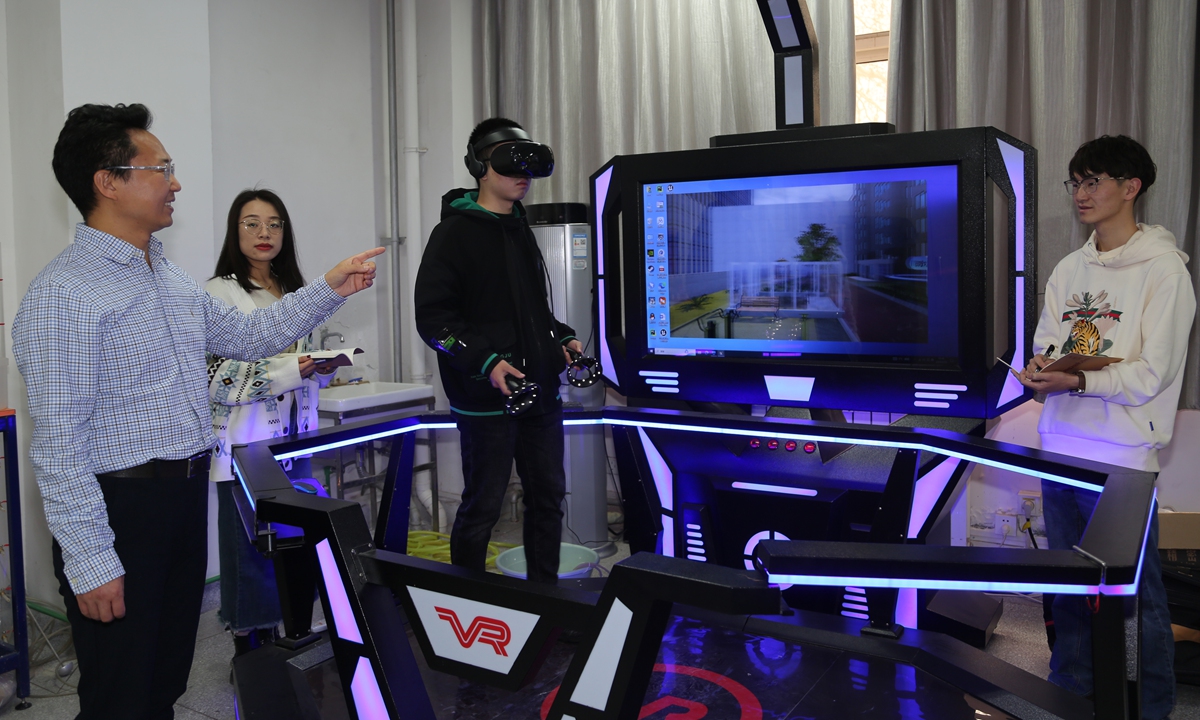
Students from Xi'an University of Technology test a virtual reality-enabled emergency evacuation simulation system tailored for flood disasters on January 12, 2024. Photos: Courtesy of Xi'an University of Technology
Editor's Note:Extreme weather is increasingly a global challenge, and the key to addressing climate risks lies in earlier prediction, more precise action and smarter preparedness, with emerging technologies playing a vital role. The Global Times launches the "Climate Gambit" series, exploring how research teams are leveraging cutting-edge technologies, including artificial intelligence, high-performance computing and smart observation systems, to anticipate weather changes, enhance disaster early-warning and strengthen resilience against climate risks.
Inside a state key laboratory at Xi'an University of Technology, Northwest China's Shaanxi Province, there is a miniature but complete "water world" which simulated water channels, inland lakes and main rivers to recreate real flood scenarios and test their newly developed GPU Accelerated Surface Water Flow and Transport Model (GAST).
Known as a "super brain" for flood control, GAST can complete flood simulations involving more than 3 million computational units within 30 seconds, helping transform flood management from a reaction to emergency into active precautions since "flooding impacts can be predicted even before rainfall arrives."
At a time when extreme rainfall and summer flooding have become increasingly frequent, questions such as when the flooding will arrive, which roads may be submerged and when residents should evacuate have become increasingly important.
In an exclusive interview with the Global Times, Hou Jingming, a professor at Xi'an University of Technology and the leader of the research team, explained how the GAST model seeks to answer these questions by accurately predicting flood development and identifying vulnerable areas before disasters occur, and how the model helps authorities take preventive measures to reduce casualties and economic losses.
AI empowering 'flood drill' The water tank system in the lab was designed to create a controllable, repeatable and observable environment to simulate complex hydrological processes, including river flooding, urban water level changes, lake regulation, drainage pump operations and coordinated flood-control measures.
By adjusting variations such as upstream water inflow, rainfall intensity, downstream water levels and drainage conditions, scientists can recreate different flood scenarios. Meanwhile, water levels, flow speeds and other data are collected in real time and displayed on a digital twin platform.
"If a rainstorm and corresponding floods are an exam, GAST is like a 'drill,'" Hou said. "It can simulate how floods develop, where water will flow, which areas may be inundated and when river levels may rise, ensuring authorities are well but not overly prepared."
To answer the public's concern about "whether my neighborhood will be flooded when heavy rain arrives," the team developed new algorithms for urban surface water flow, including improvements in terrain slope and friction calculations.
These breakthroughs have improved simulation accuracy in complex urban environments. Compared with extensive monitoring data, GAST can keep simulation errors of key hydrodynamic factors within 15 percent. This means the model can provide not only general flood trends, but also quantitative information such as water depth, flow speed and inundation areas.
Combined with AI technologies, it can identify complex relationships between rainfall, water conditions, flood depth, flow velocity and affected areas, cutting simulations from hours in traditional methods to minutes or even seconds.
The faster calculation capability means that once meteorological authorities update forecasts, the model can quickly estimate flood risks in different parts of a city.
"The earlier rainfall warnings are issued, the earlier we can identify potential flooding hotspots and high-risk areas," Hou said. "This saves valuable time for evacuation, traffic management and emergency deployment."
For smarter disaster response
Building an accurate flood prediction model also requires integrating large amounts of urban data other than weather forecasts, including urban terrain, drainage networks and infrastructure information.
For example, a model developed for Xi'an incorporates geographic data and drainage system information collected from relevant authorities and field surveys. After receiving rainfall forecasts, the system can quickly calculate possible flooding scenarios, showing when and where waterlogging may occur and highlighting vulnerable roads and areas through visual maps.
To demonstrate how the super brain works in case of possible flooding, the laboratory has set a virtual reality area where visitors can experience a simulated urban flooding evacuation in the Xiaozhai area of Xi'an. Wearing VR headsets, participants can see water levels gradually rising and follow emergency instructions to move toward higher ground.
The entire technological package has already been applied in real-world flood prevention.
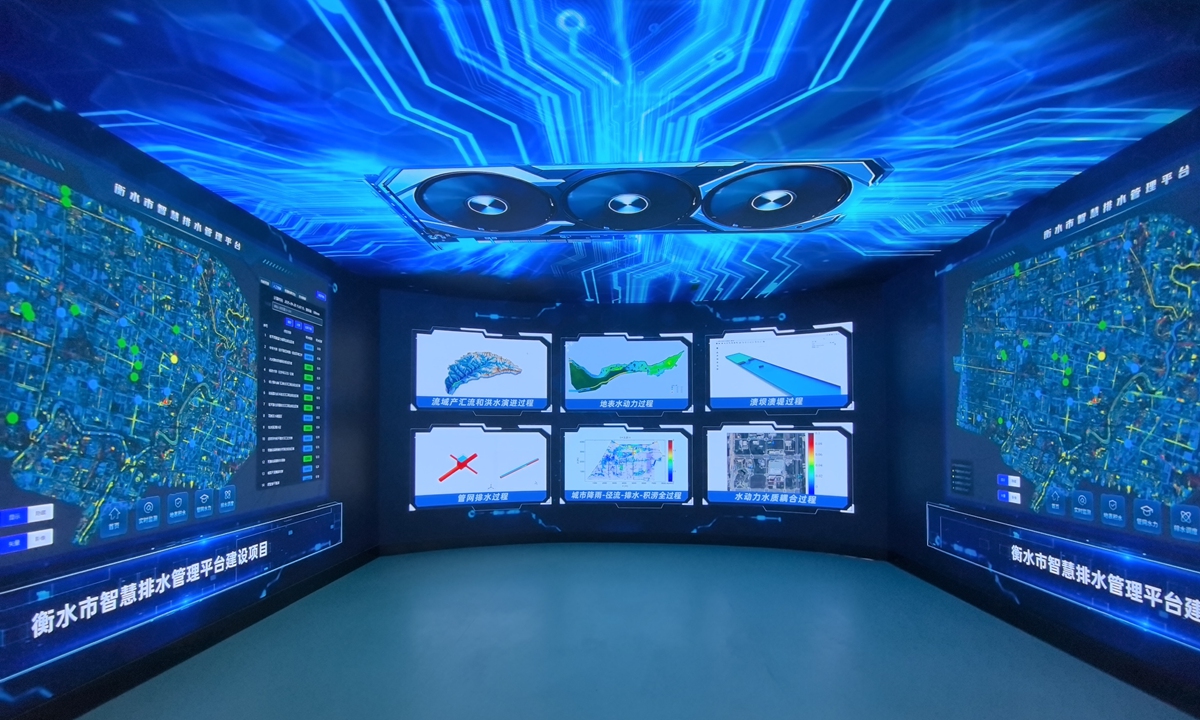
A 3D live-scene display lab in Xi'an that oversees stormwater drainage performance in Hengshui, North China's Hebei Province Photos: Courtesy of Xi'an University of Technology
During Typhoon Muifa in 2022, Haishu district in Ningbo, East China's Zhejiang Province, recorded a regional rainfall of 367 millimeters. Using GAST as its core technology, the local flood forecasting platform integrated weather forecasts, AI algorithms and real-time monitoring data to provide rolling three-hour flood risk predictions.
Post-event assessments showed that predicted risks at most locations matched actual flooding conditions. The average relative error between predicted and observed maximum water depths was 13 percent.
The GAST model was also integrated into a smart rain and flood management platform in Qinhan new city area in Xianyang of Shaanxi, and during a rainstorm warning in July 2022, the platform provided continuous monitoring and forecasts. Based on the results, local authorities shifted from routine inspections to targeted monitoring of flood-prone areas and optimized emergency drainage operations.
The model is also being applied to mountain torrent prevention, as it can simulate rapidly changing flows in complex terrain and, combined with machine learning, complete forecasts within seconds. For reservoirs and rivers, it supports sudden and gradual dam-break simulations.
In June 2026, the model was presented at a national symposium on flood risk mapping achievements. The technology has since been applied by water resources, emergency management and urban development authorities, expanding from Shaanxi to multiple provinces and regions across China.
Looking ahead, the research team is developing a framework that further keeps up with the pace focusing on AI technologies. "Currently, the system operates based on weather forecast, therefore, AI will increase efficiency by using historical cases and real-time monitoring data to correct errors and update forecasts dynamically," Hou said.
。七十多年前的朝鲜战场没有今天这么多无人机,美军的飞机却已经把这个问题摆到了志愿军面前。
到了1986年10月,洪学智以解放军总后勤部部长身份访问美国。晚宴上,美军太平洋舰队司令莱昂斯突然问他:“将军是哪个军校毕业的?”洪学智的回答很有意思,他说自己的“学校”就是美国空军。
四 | 中国军网后来解释这句话时写得很直白:当年的美军空袭,硬是把一个原本主要带兵打仗的将领逼成了现代军事后勤专家。
美国人几十年后还问这一句,并不奇怪。 因为他们当年真没弄明白,那条运输线为什么一直断不了。 洪学智去朝鲜以前并不是专门搞后勤的干部。1950年10月,他作为中国人民志愿军副司令员入朝,分管司令部、特种兵和后勤等工作。 当时志愿军甚至没有后来那种独立完整的战区后勤体系,很多供应还需要依靠国内和东北方向组织。
五 |
以前在国内打仗,部队有时能够就地筹粮,武器装备还可以大量依靠战场缴获。到了朝鲜,这套办法一下遇到了麻烦。当地经过战争破坏,几十万人的军队不可能全靠附近村庄解决给养;美军又拥有很强的空中力量,缴获的重装备还没来得及利用,就可能遭到飞机轰炸。弹药型号也越来越复杂,靠“打到什么用什么”已经很难支撑大规模现代战争。 前几次战役打下来,一个限制越来越明显:前线许多粮食和弹药需要战士自己背,一轮大规模进攻往往只能维持约7天。 李奇微后来注意到这个规律,把志愿军这种攻势称为“礼拜攻势”。
六 | 进攻几天以后,弹药少了,人也疲劳,补给又没及时赶到,美军就抓住间隙反击。
战士敢不敢打,在这里已经不是全部问题。 山那边有十万发炮弹,送不到炮位,等于没有。 后方仓库有粮食,汽车开不到前线,战士照样饿肚子。 洪学智后来一辈子搞后勤,很大一部分起点就在这几个月里。
七 |
第五次战役前后,洪学智回国汇报朝鲜战场的供应问题。他提出的已经不是“再多给几辆汽车”这样的小修小补,而是要求把后方重新组织起来:防空、通信、铁道、工兵、兵站、运输不能各干各的,需要有一个机构统一指挥。 中央军委随后决定成立中国人民志愿军后方勤务司令部,洪学智兼任司令员。后来洪学智的儿子洪虎回忆,父亲起初还不愿接这个差事,觉得自己本来是军事干部,彭德怀最终还是把任务压给了他。 这个机构成立以后,朝鲜后方才逐渐有了一套完整骨架。物资从国内进入朝鲜以后,不再只靠一条道路从头送到底;铁路、公路、兵站开始分段连接,哪里断了就换线路,汽车送不到的地方继续倒运,重要仓库也尽量转入半地下或者隐蔽位置。1951年8月又成立中朝联合铁路运输司令部,后来进一步把运输、抢修、高炮防护结合起来。 洪学智处理的问题很少有什么传奇色彩。 每天都是桥。 路。 油。
八 |
粮。 汽车。 伤员。
九 |
可战争拖到几个月以后,这些东西比一场漂亮冲锋更容易决定前线还能不能继续打。 1951年夏天,朝鲜北部又碰上几十年少见的大洪水,公路、铁路和仓库大面积受损。紧跟着,美军开始强化针对志愿军后方运输系统的空中封锁,试图从铁路桥梁、车站和公路节点下手,把前线同后方割开。 中国军网的军史资料记载,1951年8月至1952年6月的“绞杀战”期间,美军一度把大部分空中力量集中用于破坏运输线。
十 |
铁路枢纽、桥梁和汽车都是重点目标。战争期间,美军飞机出动规模达到百万架次级别,运输线长期处在空袭压力之下。 打到这个程度,靠一条修得特别结实的公路没有用。 今天修好,明天还会炸。 志愿军后勤后来采取的办法更像是在和飞机比恢复速度。桥炸坏了,抢修;大桥暂时修不了,就搭便桥、绕行线;铁路一边不能走,就想办法利用还能通的一边;公路沿线修汽车隐蔽所,车辆夜间行驶,防空哨负责观察敌机,一有情况就报警。铁路、公路、漕运也能根据情况接起来使用。 有个变化很能看出效果。
十一 |
战争初期司机夜间不开灯,怕遭敌机发现,一夜往往只能跑30至40公里,撞车翻车还不少。
十二 | 防空哨、隐蔽点以及道路条件逐渐改善以后,到1952年,部分夜间运输距离已经提高到
200公里以上。中国军网统计,汽车损失率也从第一年的约40%逐年大幅下降。
十三 |
这不是某个司机忽然变勇敢了。 路、哨兵、通信、抢修、掩体一起改变以后,汽车才敢跑得更快。 这里还有一组数字,比“钢铁运输线”几个字更有意思。 根据《解放军报》刊载的抗美援朝后勤资料,1951年1月至1952年2月,美军对志愿军后方的轰炸强度大幅增加,而志愿军物资运输量反而增加了两倍以上。 国防部刊载的洪虎回忆还记录,经过后勤体系不断改进,汽车和物资损失都明显下降,运输效率提高。 铁路上的情况同样如此。
十四 | 1951年7月,美军对铁路的轰炸次数已经是当年1月的数倍,铁路运输量却比1月更高;到1952年,美军轰炸强度继续上升,铁路仍没有被彻底压死。
美国远东空军的人员后来曾把一个问题称为“谜”:中国军队的后勤为什么一直没有中断?相关军史资料甚至记载,美军方面战后很想见见负责这套后勤系统的人。 这件事放到今天看,容易产生一个误解,好像洪学智靠几个奇招骗过了美国空军。 实际规模要大得多。
十五 |
后方有铁道兵、汽车兵、高炮部队、工兵、仓库、兵站、通信人员,还有大量中朝群众参与抢修和运输。反“绞杀战”时期,仅后勤战线就有十几万人,大规模修路时甚至要动员二线作战部队一起干。洪学智的作用,是把这些过去分散的力量逐渐放进一个统一的保障体系。 这才是他难学的地方。 会修一座桥的人很多。 能让桥梁、汽车、防空、仓库、铁路和几十万人的供应同时转起来,是另一回事。 洪学智自己文化程度并不高。中国军网介绍1986年那段往事时特别提到,他甚至没有接受过完整的小学教育。
十六 | 可这个人后来两次担任解放军总后勤部部长,1988年再次被授予上将军衔。
到了1986年的美国晚宴上,美军太平洋舰队司令问他是哪所军校毕业的,表面看是普通寒暄。 洪学智为什么偏偏回答“美国空军”? 因为他1950年进入朝鲜时,也没有现成答案。 美国人先用飞机告诉志愿军,现代战争的后方一样是战场;一座桥、一个仓库、一队汽车都可以成为打击目标。
十七 | 洪学智和志愿军后勤部队随后花了三年时间,学会怎么在这种条件下让前线继续吃饭、开炮、补充人员,把伤员送下来。
七十多年以后,现代战争已经有卫星、无人机和远程精确武器,后勤线面对的危险比当年更多。2026年中国军网讨论现代联合作战时仍把补给线路脆弱、物资消耗强度大、保障体系必须保持韧性列为重要问题。技术换了,仗怎么打也变了,那道基础题没有消失。 洪学智当年没有无人运输车,没有卫星导航,甚至长期没有制空权。 他手里有的,是一群司机、铁道兵、高炮兵、工兵和几条天天挨炸的路。
十八 |
美国空军把路炸断。 晚上有人把它接起来。 第二天再炸。 夜里再修。 到后来,美军飞机增加了,送到前线的东西反倒比以前多了。
十九 |
1986年,美国人终于坐在饭桌前见到了那个当年负责这件事的人。 他们问他在哪儿学的。 洪学智的答案,也就只需要那一句了: 美国空军。
|
返回,查看更多。
Current article:http://xia0s.yepenchunshouzuiwai.shop/list_t5c/cix.html
Published on:06:46:01