
穆赫兰道
“红灯停表”,让安全与效率不再是单选题_我的网站

A | 近日,平台经济“破卷向善”第二次协商对话在京召开。

B |
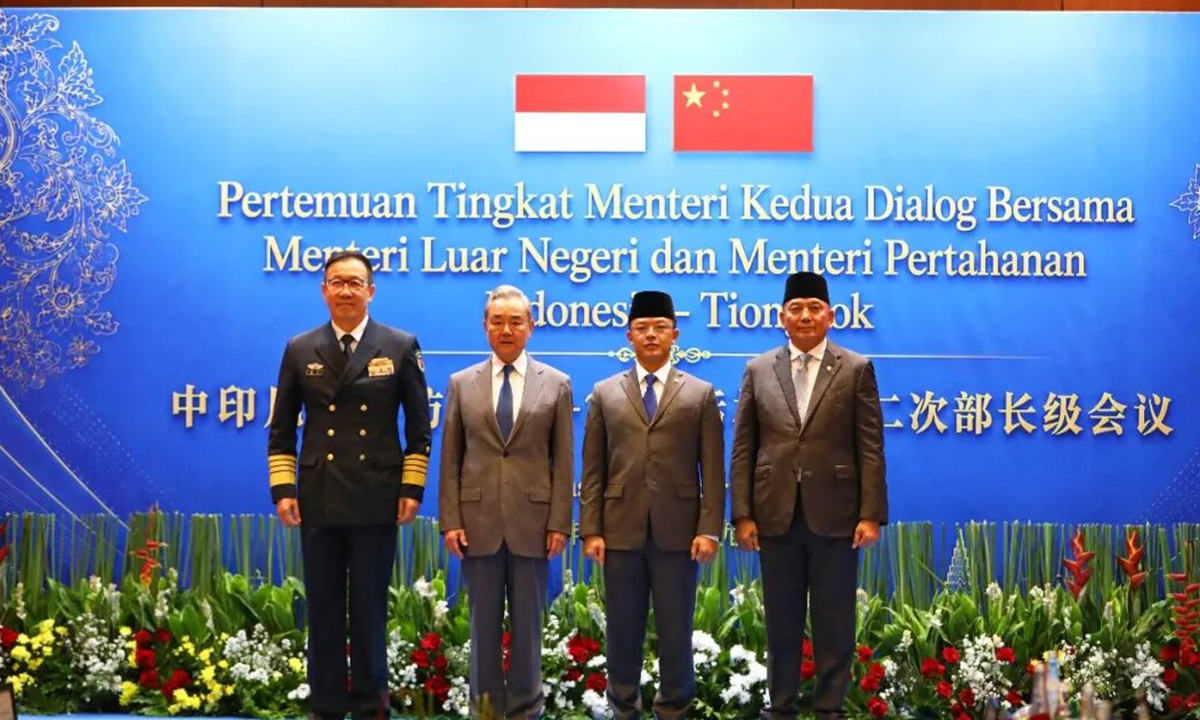
Chinese Foreign Minister Wang Yi and Indonesian Foreign Minister Sugiono co-chaired the conference. The two sides had an in-depth exchange of views on advancing the building of a China-Indonesia community with a shared future and reached broad consensus, according to Chinese Foreign Ministry's readout.
Wang said that the establishment of the comprehensive strategic dialogue mechanism is an important initiative for the two sides to implement the consensus reached by the two heads of state and advance the building of a China-Indonesia community with a shared future that enjoys regional and global influence.
Noting that China has always placed Indonesia in an important position in its diplomacy, particularly in neighborhood diplomacy, the Chinese top diplomat said China stands ready to work with Indonesia to strengthen all-round China-Indonesia cooperation, and pool greater development synergy to jointly tackle risks and challenges.
Stressing that the conference marks an important milestone in bilateral relations, Sugiono said China's development has brought enormous opportunities to the world, particularly neighboring countries such as Indonesia.
Sugiono added that Indonesia firmly adheres to the one-China policy and supports China's cause of reunification. Just in mid-August, the Chinese and Indonesian navies held a joint naval navigation exercise in waters east of China's Taiwan island.
The two sides also agreed to uphold strategic autonomy and firmly support each other's core interests. They also decided to launch the formulation of the China-Indonesia Five-year Action Plan (2027-2031).
The dialogue mechanism was established when Sugiono visited Beijing in April 2025.
Following the Conference of the China-Indonesia Comprehensive Strategic Dialogue Mechanism, the two sides also held a "2+2" meeting, pairing foreign and defense ministers in joint dialogue.
During the meeting between Chinese Defense Minister Dong Jun and his counterpart Sjafrie Sjamsoeddin on Friday, the two sides stated that under the strategic guidance of the heads of state of the two countries, the military-to-military relations face favorable development opportunities with broad prospects for cooperation.
Both sides should continue to strengthen military mutual trust, maintain close exchanges between the two militaries at all levels, deepen practical cooperation in multiple fields, and work together to safeguard regional peace and stability.
"Amid rising power politics, hegemonism, and protectionism, the first China-Indonesia Comprehensive Strategic Dialogue Mechanism conference has further enhanced strategic mutual trust and lifted bilateral relations to a new height," said Xu Liping, director of the Center for Southeast Asian Studies at the Chinese Academy of Social Sciences.
At its core, the mechanism does not target any third party; rather, it upholds win-win cooperation, peaceful development, and multilateralism while promoting collective self-strengthening of the Global South, said Xu. "It sets an example for the region and beyond, effectively offsetting extra-regional interference and noise from within and outside the region."
In specific areas, the two sides pledged to expand cooperation in areas such as artificial intelligence and poverty reduction. They agreed to restart cooperation in fishing, accelerate maritime cooperation and push forward joint development.
Both sides agreed that deepening cooperation in energy and mineral resources serves their common interests, and expressed readiness to jointly build a comprehensive, open and green partnership in energy and mineral resources.
Official data shows that China has been Indonesia's largest trading partner for 13 consecutive years, with bilateral trade reaching $167.49 billion in 2025, up 13.4 percent year-on-year. From the Jakarta-Bandung High-Speed Railway to industrial parks and other projects, the two sides have maintained a sound momentum of cooperation.
"As two important Global South countries with highly complementary economies, China and Indonesia have taken the lead in the region in integrating traditional sector cooperation with emerging economic cooperation," said Xu.
He added that Beijing-Jakarta cooperation is characterized by equal emphasis on and deep integration of traditional and new-quality productive forces. "Firmly grounded, multi-dimensional in scope, and rich in substance, it has become a bellwether for regional cooperation," Xu added.
In terms of the regional and global scope, the two sides also agreed to deepen cooperation within the framework of the four major global initiatives, strengthen policy coordination in multilateral mechanisms such as the United Nations and BRICS, oppose unilateral bullying and power politics, and safeguard international fairness and justice as well as the legitimate rights and interests of developing countries.
The two sides agreed to fully and effectively implement the Declaration on the Conduct of Parties in the South China Sea and work toward the early conclusion of the Code of Conduct (COC) in the South China Sea.
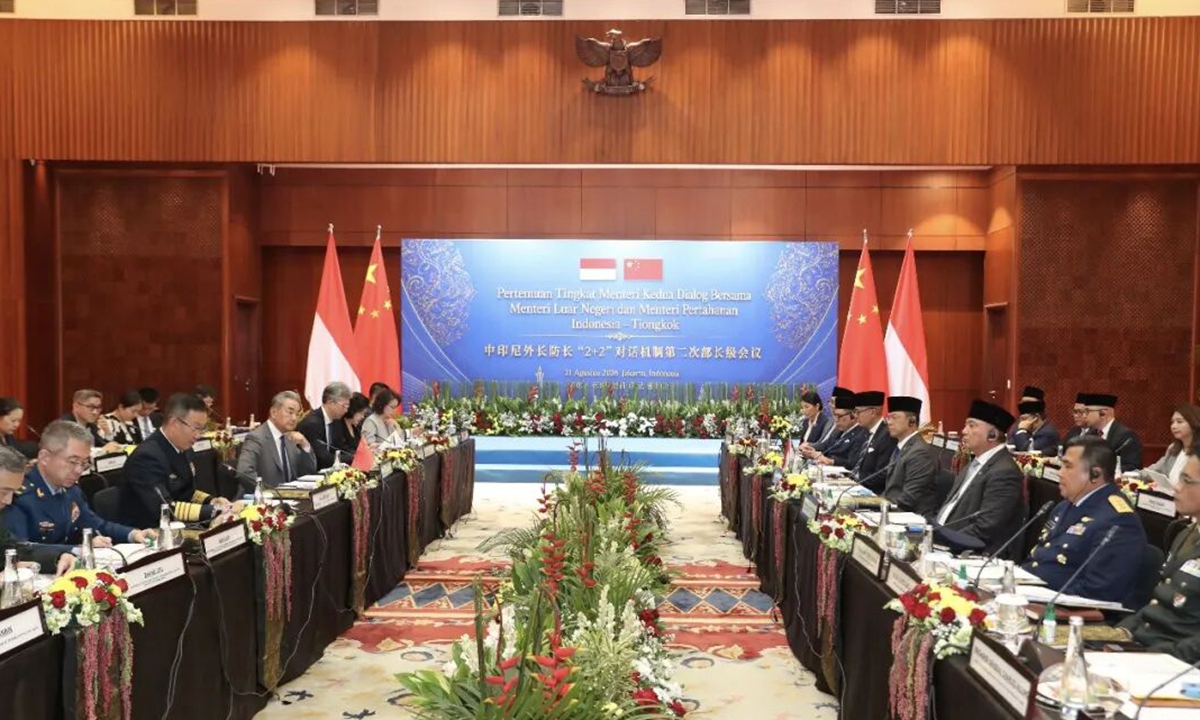
During the "2+2" meeting, the two sides agreed to deepen defense cooperation and promote the regularization and institutionalization of practical cooperation in areas including equipment and technology, joint exercises and training, personnel training, and maritime security, while continuously improving the quality and effectiveness of such cooperation, according to a readout released by the Chinese Foreign Ministry.
The two sides jointly advocate an Asian security model featuring shared security, and will work to uphold the mainstream of regional cooperation and peace and stability in the South China Sea, the readout said.
Amid attempts by certain countries to create trouble and fabricate confrontational false narratives in the South China Sea, China and Indonesia, both important South China Sea littoral states, are duty-bound to jointly safeguard regional peace and stability, said Xu. "Their consensus on this issue injects positive energy into the region, contributing to the early conclusion of the COC."
According to the expert, despite disputes, the overall situation in the South China Sea is manageable and stable, and the close cooperation between China and Indonesia demonstrates to the international community the broad trend and aspiration of peace, friendship, and cooperation in the region.
。京沪两地市场监管部门围绕外卖骑手算法优化,组织美团、淘宝闪购、京东外卖三家平台共商共治。三家平台表示将率先集中在京落地“红灯停表”,骑手等红灯的时长在考核时间中顺延,9月起在朝阳区、通州区、经开区等部分区域率先试运行。 所谓“红灯停表”,即平台接入交管部门实时信号灯数据,结合骑手位置、行驶轨迹精准匹配,识别骑手确在路口等灯后累计实际等待时长并自动顺延配送时间,全程无需申诉、不扣服务分。 这一功能看似只是计时方式的微调,击中的却是行业顽疾的命门。长期以来,骑手被夹在交通法规与配送倒计时之间——主干道一个红灯动辄90秒甚至180秒,一趟经过数个路口;手上压着多单时,盯着倒计时的焦虑可想而知。算法将个人无法自主控制的时间成本转嫁给骑手,客观上形成“守法吃亏、冒险获利”的逆向激励。

C | 今年以来,中央网信委《生活服务类平台算法负面清单(试行)》、中华全国总工会等四部门《平台劳动规则和算法协商指引(试行)》相继印发,直指算法计时痛点。“红灯停表”正是政策导向的具象落地——把交通规则刚性要求嵌入平台算法逻辑,从制度层面消除“抢灯”动机,让安全与效率不再是一道单选题。 这更是城市治理思维的一次跃升。以往治理新业态交通乱象,多惯于“事后管人”:闯红灯罚款,超时处罚,却鲜少追问骑手为何冒险。“红灯停表”用公共交通规则约束平台算法的效率冲动,从源头消除违法诱因,实现从“末端惩戒”到“源头疏导”的转变。江苏苏州首批1100个路口上线“红灯停表”功能以来,试点区域骑手闯红灯率持续改善,交通事故率有所降低,绝大多数订单补时不足2分钟,用户配送体验未受明显影响。这表明,给劳动者松绑不等于给效率打折,规则与速度完全可以兼得。 更深一层看,“红灯停表”是政务数据开放赋能民生治理的生动样本。从江苏苏州1100个路口试点到江苏无锡全城4253个路口全覆盖,只用了短短10余天;北京紧随其后启动三区试运行……这些实践都印证了模式的可复制性。不同于“一刀切”的粗放规则,它承认每名骑手、每段路程的真实差异,用数据精度匹配治理精度,实现了从“统一计时”到“量身核算”的转变,本质上体现的是以人为本的精细化治理理念。 当然,“红灯停表”的单纯落地并非终点。目前试点仅覆盖部分接入数据的路口,对于外卖员多单并行配送以及恶劣天气等场景,仍需进行相关细化配套。算法治理的核心在于平衡效率与公平、兼顾安全与速度,唯有持续把劳动者权益写进算法逻辑,平台经济才能行稳致远。
Current article:http://xia0s.yepenchunshouzuiwai.shop/news/20260826_28196.html
Published on:14:14:20
 长城
长城 80s
80s